

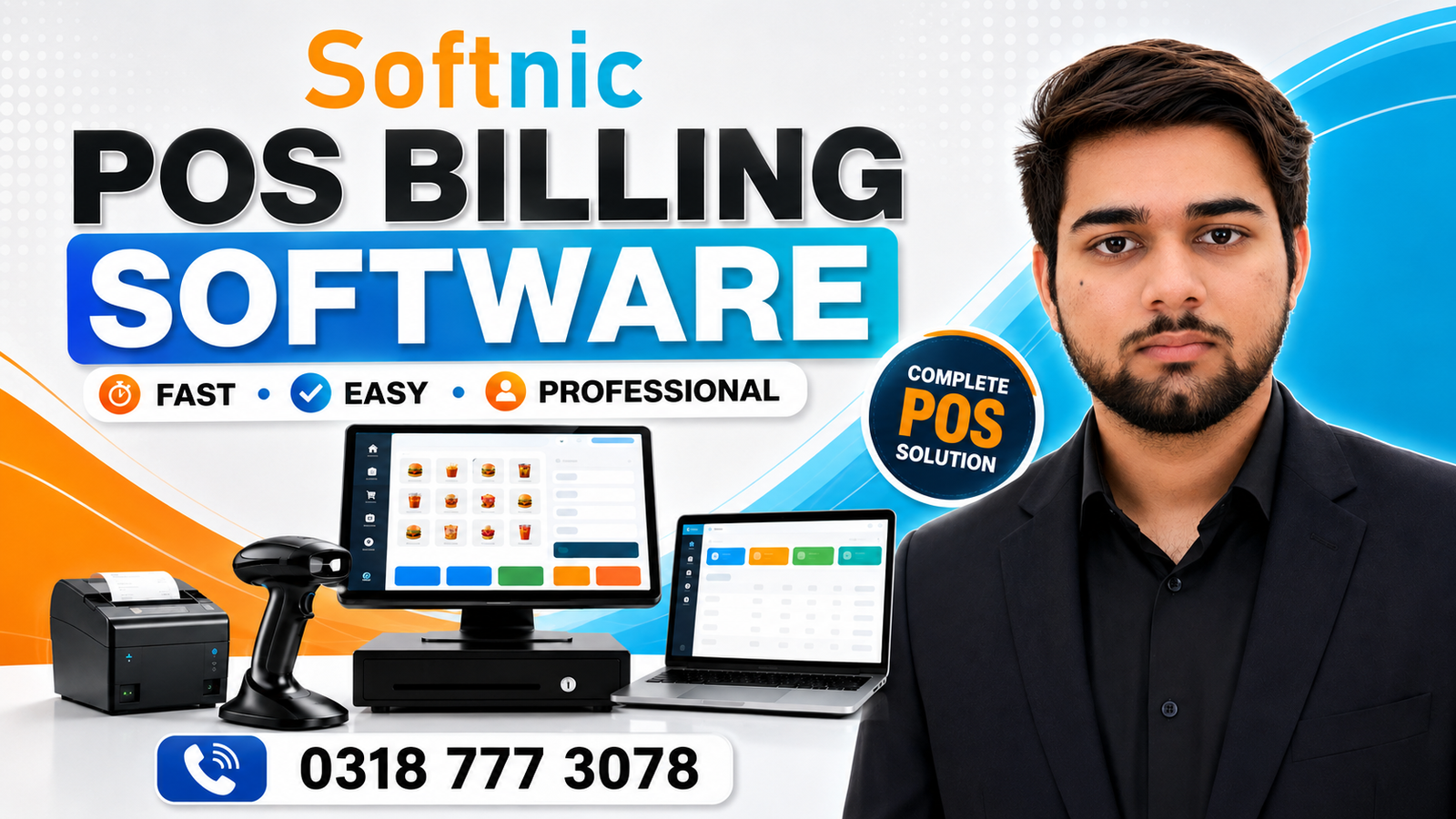
Pos Accounting Software
POS accounting software combines point‑of‑sale (POS) operations with accounting functions, allowing businesses to capture sales data at the checkout and automatically feed that information into their general ledger, tax calculations, and financial reporting. For a company like Softnic Solutions, which delivers custom POS and accounting systems, understanding the role of integrated POS accounting software is essential for any business that wants to reduce manual entry, improve accuracy, and make faster, data‑driven decisions.
What Is POS Accounting Software?
At its core, POS accounting software is a unified platform that handles two critical workflows: processing transactions at the point of sale (such as cash registers, online stores, or mobile checkout apps) and recording those transactions in an accounting system. Instead of entering each sale manually into a separate accounting program, the POS sends real‑time data—such as invoice numbers, customer details, payment methods, and tax amounts—directly to the accounting module. This eliminates duplicate data entry, reduces errors, and ensures that financial reports reflect the most current sales activity.
Key Benefits for Businesses
- Real‑time financial visibility. Managers can view sales, profit margins, and cash flow as transactions occur, enabling quicker inventory and pricing decisions.
- Reduced manual work. Automatic data synchronization cuts down on time‑consuming bookkeeping tasks and lowers the risk of human error.
- Accurate tax reporting. Integrated tax calculations and audit trails simplify compliance and prepare you for tax audits.
- Streamlined inventory management. Sales data instantly updates stock levels, helping prevent stock‑outs and over‑ordering.
- Scalable operations. As your business grows, the software can handle higher transaction volumes and more complex accounting requirements without a complete system overhaul.
How to Choose the Right POS Accounting Solution
Selecting the best POS accounting software depends on several factors. Consider the size of your operation, the industry‑specific features you need, and how the solution will fit with your existing technology stack. Below is a straightforward evaluation process that can guide your decision‑making.
- Define your business needs. List must‑have features such as multi‑store support, inventory tracking, customer loyalty programs, and reporting capabilities.
- Assess integration requirements. Ensure the POS can connect with your current accounting system, ERP, or third‑party tools like CRM platforms.
- Evaluate deployment options. Decide between cloud‑based (subscription) and on‑premise solutions based on control, security, and IT resources.
- Review scalability. Choose a platform that can grow with you, supporting additional registers, new sales channels, and advanced analytics.
- Check for industry expertise. Look for vendors with proven experience in your sector—restaurant, retail, wholesale, or services.
- Consider support and maintenance. Reliable customer support, regular updates, and training resources are crucial for smooth adoption.
Integration with Existing Systems
Seamless integration is one of the most valuable aspects of modern POS accounting software. When the POS talks directly to your accounting module, you avoid the hassle of exporting CSV files and importing them later. For businesses already using inventory management tools, the integration ensures that sales automatically reduce stock levels, and purchase orders can be generated based on sales forecasts.
Softnic Solutions offers Inventory And Accounting Software Development services that focus on creating tight data flow between POS transactions and inventory updates, giving you a single source of truth across all financial and operational processes.
Industries That Benefit Most
While any business that handles sales can gain from POS accounting integration, certain sectors see the most immediate impact.
- Restaurants. Real‑time order tracking, table management, and automatic tip handling integrate smoothly with kitchen orders and financial reporting. Explore our Custom Restaurant POS Software Development to see how we tailor solutions for dine‑in, take‑out, and delivery scenarios.
- Retail. Multi‑location stores benefit from centralized sales data and inventory synchronization, reducing the risk of over‑stocking or stock‑outs. Our Custom Retail POS Software Development services address barcode scanning, loyalty programs, and omnichannel retailing.
- Wholesale and distribution. High‑volume transactions require robust credit management, bulk pricing, and detailed audit trails. Integrated POS accounting helps maintain accurate ledgers while streamlining order processing.
Implementation Best Practices
Even the most feature‑rich POS accounting system can fall short if implementation isn’t handled carefully. Follow these best practices to ensure a smooth transition:
- Clean up existing data. Remove duplicate customer records, reconcile open invoices, and verify inventory counts before migration.
- Map data fields. Align POS data fields (e.g., product codes, payment types) with your accounting chart of accounts to avoid misclassification.
- Run parallel systems initially. Use the new POS alongside the old system for a trial period, comparing reports to verify accuracy.
- Train staff thoroughly. Conduct hands‑on workshops focusing on both POS operations and basic accounting reports they may need to review.
- Establish backup and recovery procedures. Ensure daily backups of both POS and accounting data, and test restoration processes.
Common Pitfalls to Avoid
When adopting POS accounting software, many businesses stumble on a few recurring issues: assuming the system will require no customization, neglecting data migration planning, or overlooking the need for ongoing support. A short‑term focus on price can lead to long‑term inefficiencies, so prioritize a solution that aligns with your operational workflow and growth plans.
Softnic Solutions’ POS Accounting Software Development Services
Softnic Solutions specializes in building custom POS accounting platforms that are tailored to the unique needs of each client. Whether you are launching a new retail outlet, expanding an existing restaurant chain, or modernizing a wholesale operation, our development team can design a solution that:
- Automates transaction recording and financial posting.
- Provides real‑time dashboards for sales, inventory, and cash flow.
- Supports multi‑currency and multi‑tax configurations for global businesses.
- Integrates with third‑party accounting tools, e‑commerce platforms, and CRM systems.
- Offers role‑based access controls to protect sensitive financial data.
Our approach begins with a thorough requirements gathering phase, followed by iterative prototyping and testing. Clients benefit from end‑to‑end support, from initial concept to deployment and post‑launch maintenance. For more information on how we build custom POS software, visit our dedicated page, and for accounting‑specific solutions, check out our Custom Accounting Software Development service.
Why Partner with Softnic Solutions?
As a Pakistan‑based software development firm, Softnic Solutions combines local market insight with global best practices. Our team understands the regulatory environment of Punjab businesses and can deliver solutions that comply with local tax and reporting requirements while staying aligned with international standards. By choosing Softnic Solutions, you gain a technology partner that focuses on practical, scalable, and secure POS accounting software that grows with your business.
In summary, POS accounting software is more than a convenience—it’s a strategic asset that drives operational efficiency, financial accuracy, and growth. By selecting a solution that integrates smoothly with your existing systems, addresses industry‑specific needs, and is supported by a reliable development partner like Softnic Solutions, you position your business for sustained success in an increasingly digital marketplace.

