Inventory Management System Karachi
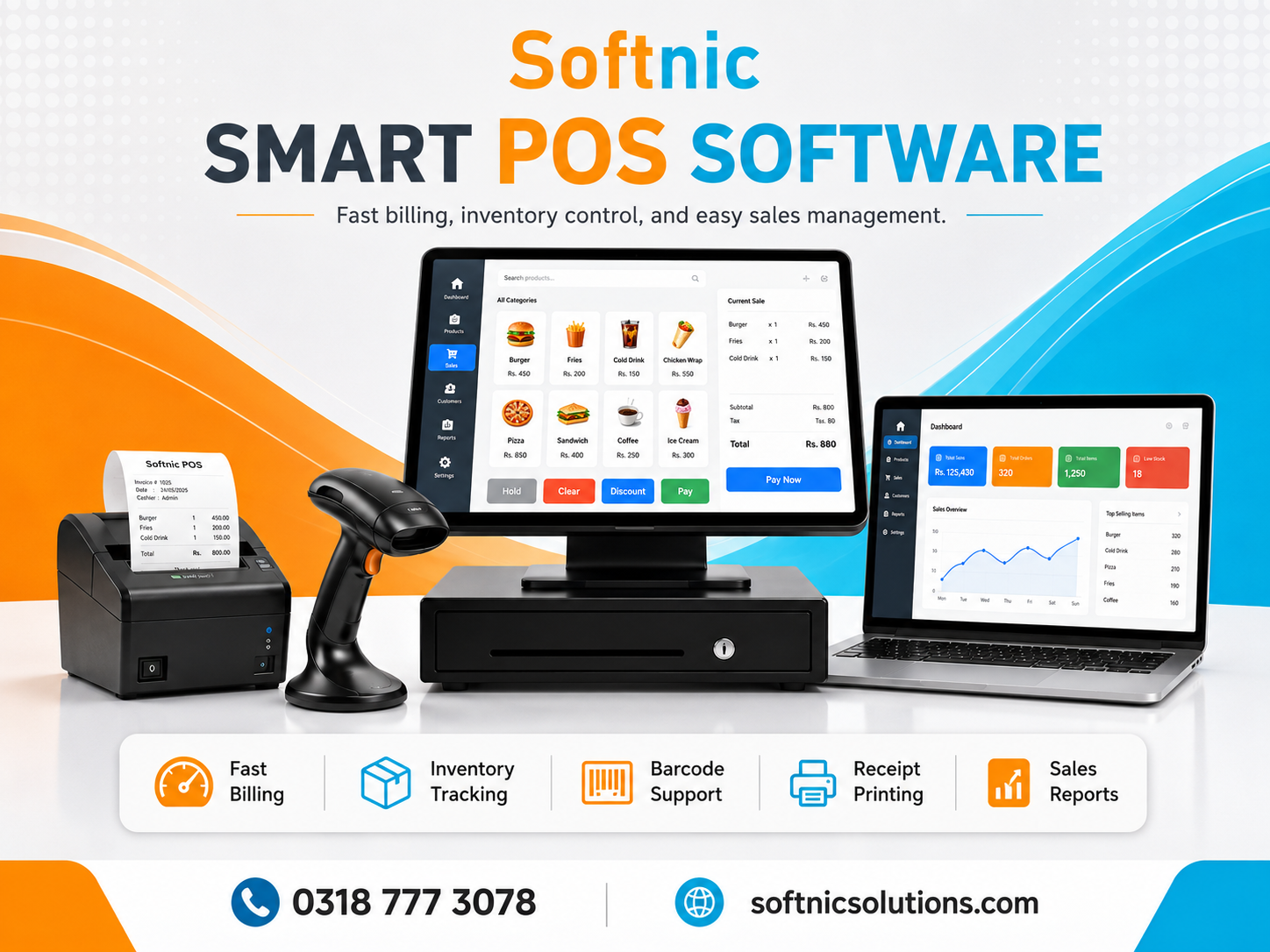
Running a retail, wholesale, or manufacturing business in Karachi means handling a constant flow of goods, suppliers, and customers. An inventory management system (IMS) helps you track stock levels, automate reordering, reduce waste, and keep your operations running smoothly. Softnic Solutions, based in Daska, Punjab, develops custom IMS solutions that fit the specific needs of Karachi‑based enterprises, from small shops to growing distributors.
What an Inventory Management System Does
At its core, an IMS records every item that enters or leaves your warehouse or store. It updates quantities in real time, generates reports on turnover, and can trigger alerts when stock falls below a predefined threshold. By integrating with sales channels, accounting software, or a POS system, the system creates a single source of truth for inventory data.
Key Features to Look For
- Real‑time stock tracking – instant updates across all locations.
- Automated reorder points – the system suggests purchase orders when inventory dips.
- Barcode/QR code support – speeds up receiving, picking, and shipping.
- Multi‑warehouse visibility – view and transfer stock between Karachi branches.
- Reporting and analytics – insights on best‑selling items, slow movers, and carrying costs.
- Integration capabilities – connect with e‑commerce platforms, accounting tools, or POS hardware.
Benefits for Karachi Businesses
Implementing a reliable IMS can lead to measurable improvements:
- Reduced stockouts and overstock situations, which protects cash flow.
- Lower labor costs because manual counts and spreadsheets are minimized.
- Better customer satisfaction as products are available when promised.
- Enhanced ability to scale operations, whether you open a new outlet in Saddar or expand to a logistics hub near Port Qasim.
How to Choose the Right System
- Assess your current processes – identify pain points such as frequent stock discrepancies or delayed order fulfillment.
- Define must‑have features – consider barcode scanning, multi‑location support, or integration with existing software.
- Evaluate deployment options – cloud‑based systems offer accessibility from any device, while on‑premise solutions may suit businesses with strict data‑control policies.
- Request a demo or trial – test the user interface, reporting tools, and support responsiveness.
- Review total cost of ownership – include licensing, implementation, training, and ongoing maintenance.
- Check vendor experience – look for a provider that understands Karachi’s market dynamics and can offer local support.
Comparison: Cloud vs. On‑Premise Inventory Management
Both deployment models have trade‑offs:
- Cloud‑based
- Lower upfront investment; you pay a subscription fee.
- Automatic updates and backups handled by the vendor.
- Accessible from anywhere with an internet connection – useful for managers who travel between Karachi’s commercial districts.
- Dependent on reliable internet connectivity; data resides on external servers.
- On‑premise
- Higher initial cost for hardware and software licenses.
- Full control over data security and customization.
- Requires internal IT resources for maintenance, upgrades, and troubleshooting.
- Suitable for businesses with strict regulatory requirements or limited bandwidth.
Implementation Steps (Ordered List)
- Project kick‑off – define goals, scope, and success metrics with stakeholders.
- Data preparation – cleanse existing inventory records, assign SKUs, and prepare master data.
- System configuration – set up warehouses, locations, reorder rules, and user roles.
- Integration – connect the IMS with POS, accounting, or e‑commerce platforms as needed.
- User training – conduct hands‑on sessions for warehouse staff, sales teams, and managers.
- Go‑live and monitoring – launch the system, track key metrics, and address any issues promptly.
- Continuous improvement – gather feedback, refine processes, and schedule regular system reviews.
Caution: Common Pitfalls to Avoid
Even a well‑chosen system can fall short if certain mistakes are made:
- Skipping data cleanup – migrating inaccurate counts leads to persistent errors.
- Over‑customizing – excessive tweaks can complicate future upgrades and increase costs.
- Ignoring change management – staff resistance often stems from lack of training or unclear benefits.
- Neglecting regular audits – periodic physical counts are still necessary to verify system accuracy.
- Underestimating integration complexity – ensure APIs or middleware are compatible before committing.
By addressing these considerations, Karachi businesses can deploy an inventory management system that not only tracks stock but also drives efficiency, reduces waste, and supports growth. Softnic Solutions is ready to help you design, develop, and deploy a solution tailored to your local market needs.