

Billing Software Islamabad
Managing financial transactions accurately is one of the most critical operational requirements for commercial enterprises in Islamabad. From retail outlets in Blue Area and F-sector commercial hubs to professional service firms, wholesale distributors, and emerging tech startups, businesses face the ongoing challenge of generating rapid invoices, tracking receivables, and maintaining clear audit trails. Traditional manual bookkeeping or generic spreadsheets often lead to calculation errors, misplaced records, and delayed cash flow reconciliation.
Adopting dedicated billing software in Islamabad enables organizations to automate day-to-day invoicing workflows, enforce standard pricing models, and monitor sales performance across multiple counters or branches. As operational complexity increases, having an organized digital billing framework becomes essential for maintaining financial hygiene and delivering a professional experience to clients.
Why Businesses in Islamabad Are Upgrading Their Billing Systems
Islamabad hosts a diverse business ecosystem ranging from corporate consultancies and medical practices to busy retail outlets and distribution networks. Each business type operates under distinct transaction models, which off-the-shelf generic tools often fail to accommodate properly. A purpose-built invoicing and billing system bridges the gap between daily front-desk sales and backend accounting.
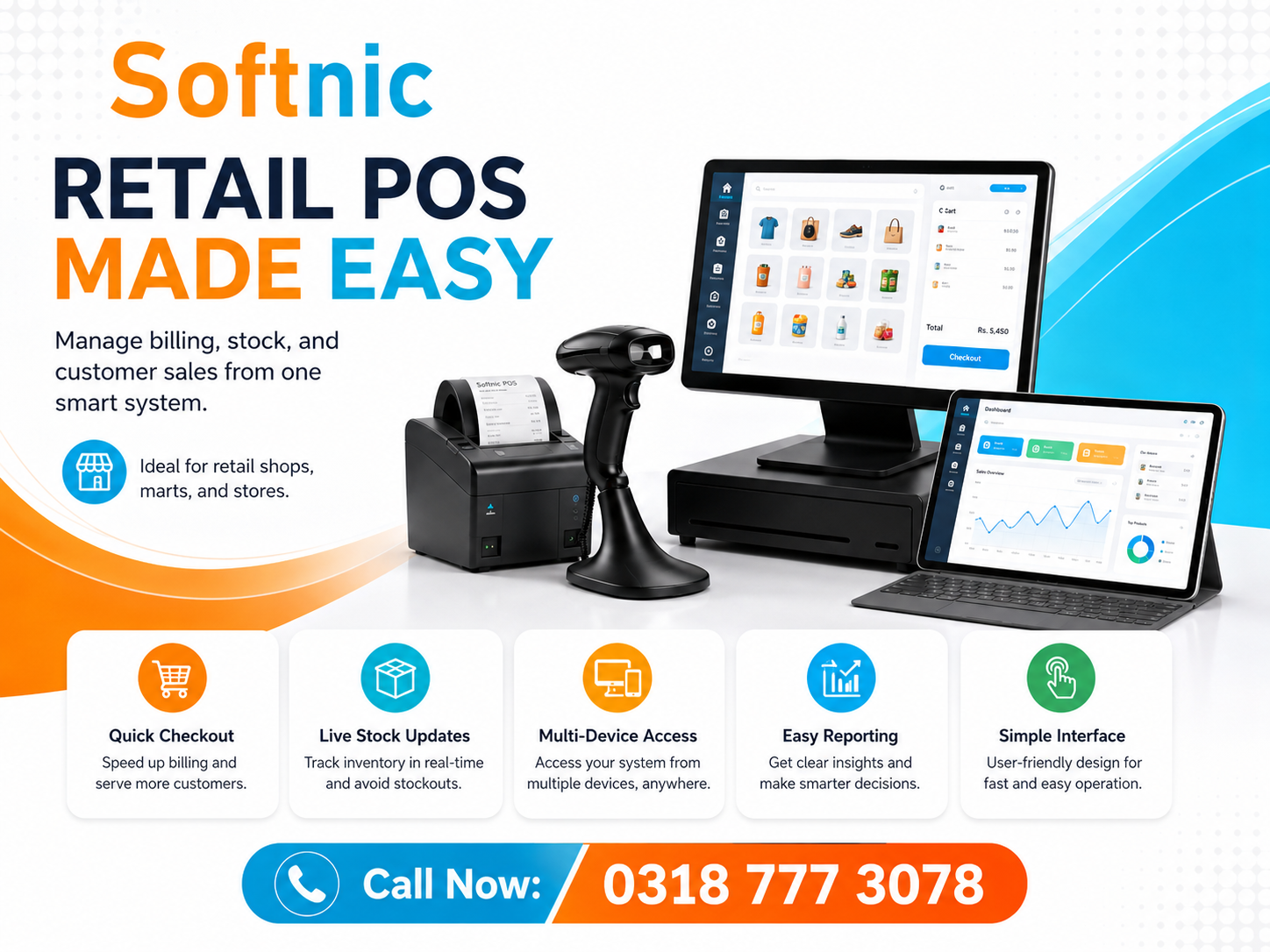
For retail and hospitality businesses, quick checkout speeds and instant receipt printing are paramount. Integrating dedicated POS software in Islamabad allows cashiers to scan barcodes, apply discounts, adjust taxes, and update inventory counts in a single action. Conversely, B2B enterprises and service agencies require milestone-based invoicing, recurring subscription billing, and quotation-to-invoice conversions, making structured business software development in Islamabad a central part of their operational efficiency.
Essential Capabilities of a Modern Billing System
When selecting or developing billing software, organizations must look beyond basic receipt generation. An effective system acts as a centralized transactional hub that safeguards financial data and enhances team productivity.
Automated Invoicing and Tax Management
Modern billing tools automate routine calculations, reducing human error during peak business hours. They allow companies to configure variable tax rates, manage standard discounts, and issue formatted digital invoices via email or PDF. For corporate entities, scheduled invoicing ensures recurring clients receive their billing statements consistently without administrative delay.
Inventory and Sales Synchronization
A major drawback of isolated billing tools is the disconnect between sales transactions and warehouse stock. Advanced billing systems automatically deduct inventory units as invoices are approved, alerting managers when stock levels drop below reorder thresholds. This real-time visibility prevents over-promising goods to clients and keeps supply chains predictable.
Role-Based Access and Audit Trails
Data integrity is vital in commercial operations. Reliable billing platforms provide granular permission controls, restricting cashier access to checkout modules while reserving ledger edits, discount approvals, and financial reporting for authorized managers. Complete audit logs record every transaction modification, cancellation, and refund, significantly reducing internal discrepancies.
Key Evaluation Checklist for Billing Software in Islamabad
Before deploying a new invoicing platform, evaluate whether the solution matches your operational rhythm and long-term business goals:
- Transaction Speed: Fast counter checkout with minimal keystrokes and quick search functionality for product catalogs or service rate cards.
- Multi-Branch Support: Centralized dashboard capable of consolidating sales and billing data across multiple locations or regional outlets.
- Data Security and Backups: Automated daily backups with encryption protocols to prevent data loss during hardware failures or network interruptions.
- Customizable Templates: Ability to format invoices with official branding, terms of service, payment instructions, and QR codes.
- Reporting and Analytics: Comprehensive reports detailing daily sales, pending dues, top-performing items, and tax summaries.
- Integration Readiness: Compatibility with existing enterprise tools through tailored software development in Islamabad for seamless data exchange.
Choosing Between Off-the-Shelf Packages and Custom Solutions
While generic billing tools can support simple, single-counter shops, growing enterprises often encounter limitations in data scalability, local tax adaptation, and workflow customization. Pre-packaged systems frequently include unnecessary features while


1 Comment
[…] in a deeper dive? Learn more about Billing Software Islamabad and explore other offerings such as Retail POS Software Islamabad or Software Consultation […]