

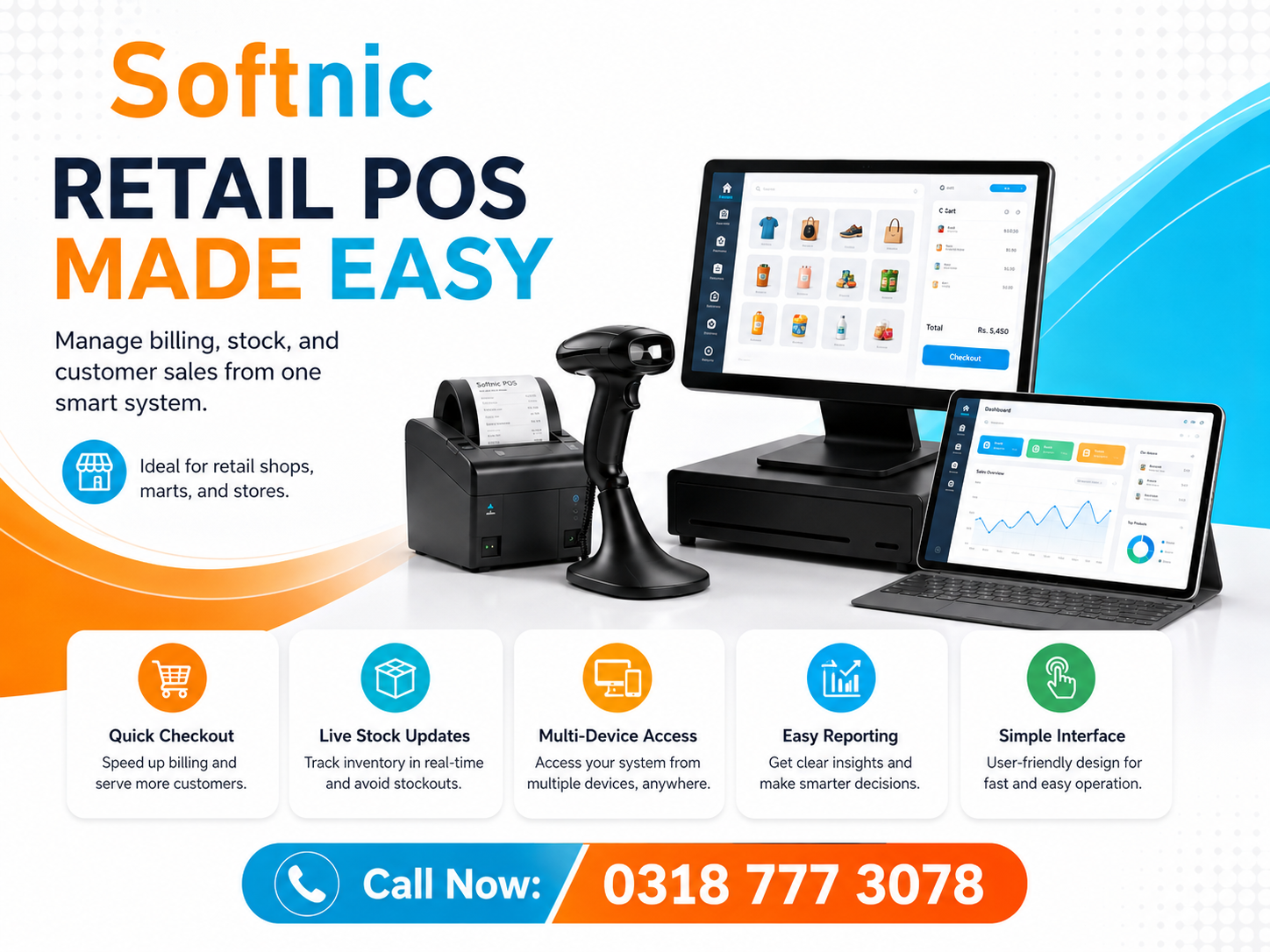
With Sales Management Barcode Inventory Software
Managing sales and inventory as separate silos creates blind spots that cost businesses money. When a sales team closes a deal but the warehouse shows different stock levels, the result is overselling, delayed shipments, and frustrated customers. With sales management barcode inventory software, these functions connect in real time, giving you a single source of truth for every product that moves through your business.
Why Sales and Inventory Need to Talk to Each Other
Traditional setups often keep sales records in a CRM or point-of-sale system while inventory lives in a spreadsheet or legacy warehouse tool. The gap between them forces manual reconciliation — someone comparing sales orders against stock counts at the end of each day. That process is slow, error-prone, and reactive.
Barcode-driven integration changes the dynamic. Every scan at the point of sale, during packing, or at receiving updates both the sales ledger and the inventory count simultaneously. The sales team sees live availability before promising delivery dates. The purchasing team sees actual sell-through rates, not last month’s estimates. Management gets accurate margin analysis because cost of goods sold reflects real-time inventory valuation.
Core Capabilities That Drive Results
Real-Time Stock Visibility Across Channels
Whether you sell through a retail counter, an e-commerce store, or a field sales team, barcode scanning ensures every transaction deducts from the same inventory pool. A scan at the register, a mobile scan by a sales rep, or an API-driven update from your online store all hit the same database. This eliminates the “phantom stock” problem where items appear available in one channel but are already committed elsewhere.
Automated Reorder Triggers Based on Actual Velocity
Static reorder points fail when demand shifts. Integrated software calculates reorder suggestions using recent sales velocity, lead times, and seasonality — not just a fixed minimum quantity. When a barcode scan records a sale, the system recalculates projected stock-out dates and flags items that need replenishment before they become critical.
Batch and Serial Number Traceability
For regulated industries or high-value goods, tracking individual units matters. Barcode labels with batch or serial numbers link each sale to a specific lot. If a recall or warranty claim arises, you can identify every customer who received affected units within minutes, not days.
Mobile Sales Enablement
Field reps equipped with barcode scanners or smartphone apps can check live stock, create orders, and process payments on location. The order syncs instantly to the central system, reserving inventory and triggering fulfillment workflows without back-office data entry.
Typical Workflow: From Quote to Reconciliation
- Quoting with confidence: A sales rep scans a product barcode or selects from a catalog showing real-time available quantities across warehouses.
- Order confirmation: The customer approves. The system reserves the exact units — by batch or serial if required — preventing double-allocation.
- Pick, pack, ship: Warehouse staff scan each item during picking. The system verifies the pick against the order, prints shipping labels, and updates inventory in one motion.
- Invoicing and payment: The completed shipment auto-generates an invoice. Payment status syncs with accounting, closing the revenue loop.
- Returns and adjustments: Returned items scan back into stock with reason codes, updating both inventory levels and sales records for accurate net revenue.
Measurable Business Impact
Companies that unify sales and inventory through barcode automation typically see improvements in three areas:
- Reduced stockouts and overstock: Better demand signals cut both lost sales and excess carrying cost.
- Faster order-to-cash cycles: Eliminating manual handoffs between sales, warehouse, and accounting shortens the time from order to paid invoice.
- Higher data accuracy: Barcode scanning replaces keyboard entry, cutting typo-driven errors that propagate through financial reports.
These gains compound when the system also feeds purchasing, production planning, and financial forecasting — all working from the same transactional data.
Choosing the Right Fit for Your Operation
Not every business needs the same depth. A single-location retailer may prioritize a simple POS with integrated inventory. A multi-warehouse distributor needs multi-location transfers, bin-level tracking, and advanced picking logic. A manufacturer requires work-in-progress tracking alongside finished goods. Evaluate based on:
- Number of sales channels and physical locations
- SKU count and complexity (variants, bundles, kits)
- Regulatory traceability requirements
- Integration needs with existing ERP, accounting, or e-commerce platforms
- Mobile and offline capabilities for field teams
Softnic Solutions builds and customizes these systems for businesses across Pakistan and beyond, aligning the feature set to your actual workflow — not a generic template. Our approach connects stock management barcode inventory software with sales operations so the data flows both ways without duplicate entry.
Implementation Pitfalls to Avoid
The most common failure isn’t the software — it’s skipping the process mapping before configuration.
Teams often rush to install, then discover their barcode labels don’t match the system’s expected format, or their picking workflow conflicts with the software’s default logic. Invest time upfront to document:
- Current sales order lifecycle from inquiry to payment
- Physical warehouse layout and bin naming conventions
- Labeling standards for products, batches, and locations
- Exception handling for damaged goods, partial shipments, and returns
Pilot with one product line or location first. Validate that scans produce the expected updates in both sales and inventory modules. Train a small group of power users who can champion adoption across teams.
Extending Value Beyond the Core
Once sales and inventory run on a shared barcode backbone, adjacent functions become easier to automate:
- Purchase management: Real-time sales velocity feeds smarter purchase orders. See how purchase management barcode inventory software closes the loop with suppliers.
- Customer insights: Linking sales history to specific customers enables targeted reorder prompts and loyalty programs. Explore customer management barcode inventory software for that layer.
- Best-practice governance: Standardize labeling, audit trails, and user permissions across the organization. Review barcode inventory software best practices to keep the system clean as you scale.
Final Thought
Barcode inventory software that includes sales management isn’t just a warehouse tool — it’s a revenue operations platform. It turns every scan into a synchronized update across sales, stock, purchasing, and finance. The result is fewer surprises, faster decisions, and a foundation that grows with your business. If you’re evaluating options, start with a clear map of your current flow and match the software to that reality. The right system should feel like it was built for your operation — because effectively, it was.

