Shop Billing Software Rawalpindi
Running a shop in Rawalpindi means juggling dozens of small tasks every hour — ringing up sales, writing handwritten bills, tracking stock, recording daily expenses, and reconciling cash at the end of a long day. Most shop owners still depend on calculators, registers, and paper ledgers that were never designed for modern retail. The result is predictable: billing errors, lost receipts, stock mismatches, and tax-time panic.
This is exactly the problem that shop billing softwareis built to solve. Instead of treating each sale as an isolated event, the right software ties every transaction to inventory, customer history, supplier records, and profit reports in real time. For retailers in Rawalpindi, adopting a proper billing system is less about “going digital” and more about gaining control over the numbers that decide whether the business grows or quietly bleeds.
What Shop Billing Software Actually Does
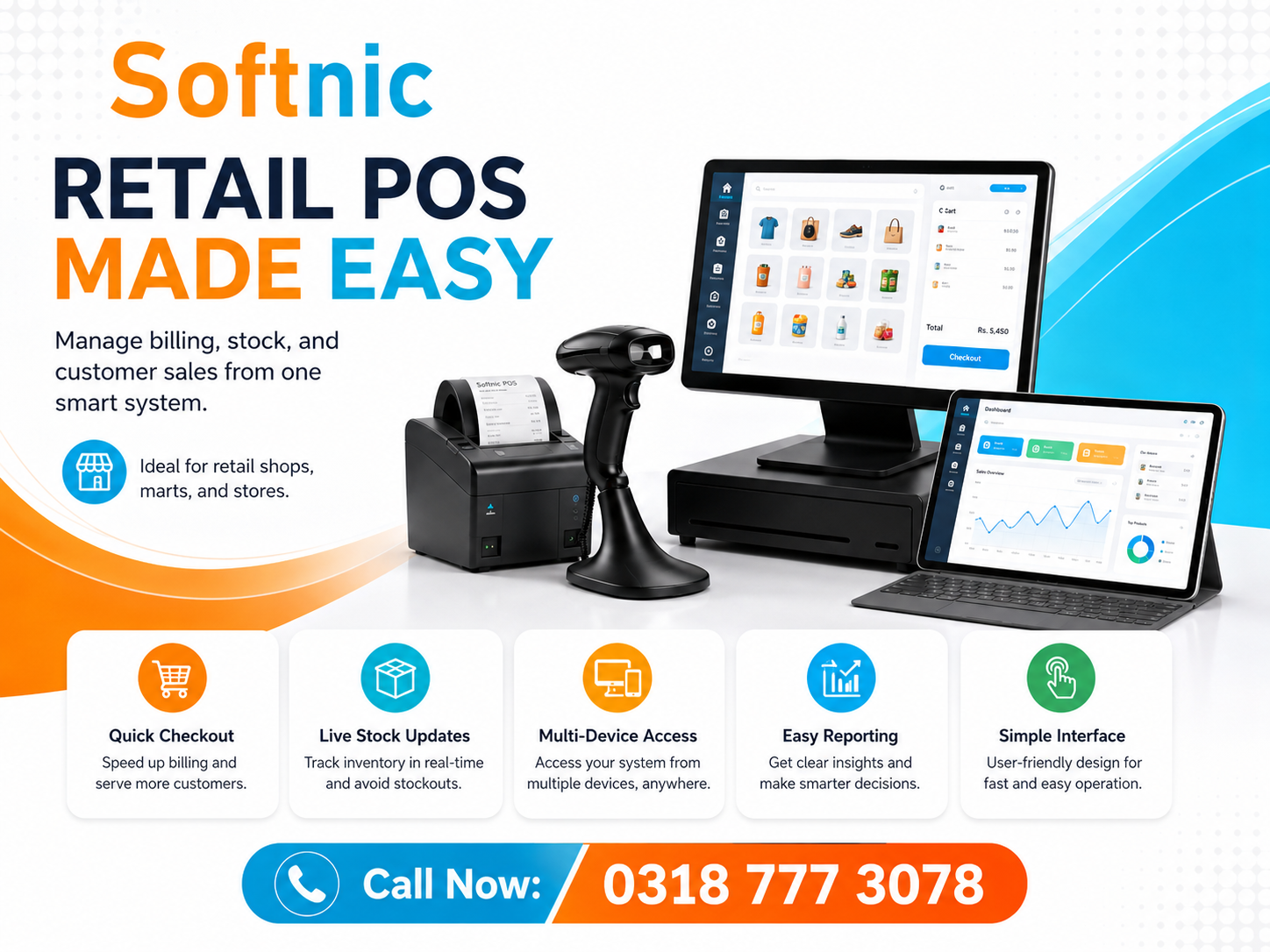
At its core, shop billing software replaces the traditional cash register and handwritten invoice with a smart, connected system. But modern solutions go far beyond printing a receipt:
- Fast billingwith barcode scanning, product search, and short-key shortcuts.
- Automatic GST, sales tax, and discount calculationsapplied per item or per invoice.
- Real-time inventory updatesso stock levels change the moment a sale is made.
- Customer and credit management, including udhaar (credit) tracking and payment reminders.
- Daily, weekly, and monthly reportsfor sales, profit, expenses, and slow-moving items.
- Multi-user accesswith role-based permissions for owner, manager, and cashier.
In short, it turns a busy shop floor into a transparent operation where every rupee is accounted for.
Why Rawalpindi Shops Need Billing Software More Than Ever
Rawalpindi is one of the most active retail hubs in Pakistan, with dense markets such as Saddar, Raja Bazaar, Commercial Market, Satellite Town, and the growing warehouse-style outlets near the GT Road corridor. Competition is fierce, customer expectations are rising, and regulators are paying closer attention to tax compliance.
Three pressures make billing software almost mandatory today:
- Customer expectations.Shoppers expect proper printed or digital receipts, return slips, and loyalty points — not torn paper chits.
- FBR tax reporting.Point-of-sale integration with fiscal requirements is becoming standard for serious retailers, and manual systems simply cannot keep up.
- Margin pressure.With rising fuel, freight, and supplier costs, owners must know exact product-wise profit, not just daily cash totals.
Owners who switch from manual billing to a structured system often discover, within the first month, that 5–10% of revenue was leaking through errors, missed items, or untracked credit — money that was earned but never visible on paper.
Key Features to Look for in Shop Billing Software in Rawalpindi
Not every billing tool suits every shop. Before choosing, Rawalpindi retailers should match features to their actual workflow.
1. POS-Style Interface
A clean point-of-sale screen with barcode support, fast product search, and quick keys for cashiers is essential. Slow interfaces lead to queues, especially during evening rush hours.
2. Inventory and Purchase Management
The software should track opening stock, purchases, sales, returns, transfers, and current balance per item. A built-in purchase module with supplier records saves hours every week.
3. Multi-Branch and Multi-Device Support
If you operate more than one outlet — or plan to open one — cloud-based access lets you view sales, stock, and reports from any device, anywhere.
4. Credit (Udhaar) and Customer Ledger
For many Rawalpindi shops, a large share of revenue runs on credit. The system must record customer balances, send reminders, and produce age-wise reports.
5. Tax, Discount, and Promotion Engine
Support for FBR-relevant tax rules, item-level and bill-level discounts, combo offers, and promotional pricing keeps billing accurate and flexible.
6. Reports That Actually Help Decisions
Beyond sales totals, look for product-wise profit, category performance, cashier-wise summaries, expense tracking, and profit-and-loss statements.
Practical Steps to Switch Your Shop to Billing Software
- Map your current process.Write down how a sale flows today — from customer entry to receipt to stock update. Identify exactly where errors and delays happen.
- List must-have features.Shortlist three or four non-negotiables: barcode billing, udhaar tracking, cloud access, or FBR integration, for example.
- Shortlist vendors carefully.Compare local Rawalpindi-focused providers with broader Pakistan-based software houses. Local expertise matters for setup, training, and support.
- Test with real data.Run a 7–14 day pilot using your actual products, suppliers, and daily transactions before committing.
- Train every cashier and manager.Even the best software fails if the team doesn’t know how to handle returns, voids, or credit notes correctly.
- Go live with a backup plan.Keep the old manual system ready for the first few days, and review end-of-day reports together with your team.
How Softnic Solutions Approaches Shop Billing Software
Softnic Solutions develops practical, Pakistan-focused business software rather than generic international templates. For shops in Rawalpindi, the team typically focuses on:
- Customizable POS screensmatched to how your shop actually sells, whether by weight, size, or variant.
- Inventory and supplier modulesdesigned for local purchasing patterns and credit terms.
- Udhaar and customer-ledger featuresbuilt around the way Pakistani retailers actually extend credit.
- Reporting dashboardsthat surface the numbers an owner actually needs to see daily.
- Ongoing supportfor training, updates, and feature requests as the shop grows.
Because Softnic works as a software development partner rather than a one-size-fits-all vendor, billing systems can start simple — covering one shop — and expand later into multi-branch, online, or e-commerce-ready setups.
Related Solutions Worth Exploring
Depending on the type of business you run, these related guides can help you compare options before deciding:
- General-purpose billing software in Rawalpindi
- Retail POS software in Rawalpindi
- Restaurant POS software in Rawalpindi
- Shop billing software in Islamabad
- Software consultation services in Rawalpindi
Final Thoughts
Switching to shop billing software in Rawalpindiis not just a technology upgrade — it is a shift from reactive to proactive management. Once every sale, return, credit, and purchase is recorded automatically, shop owners stop spending evenings balancing books and start spending them on customers, suppliers, and growth plans.
The right software pays for itself by exposing profit